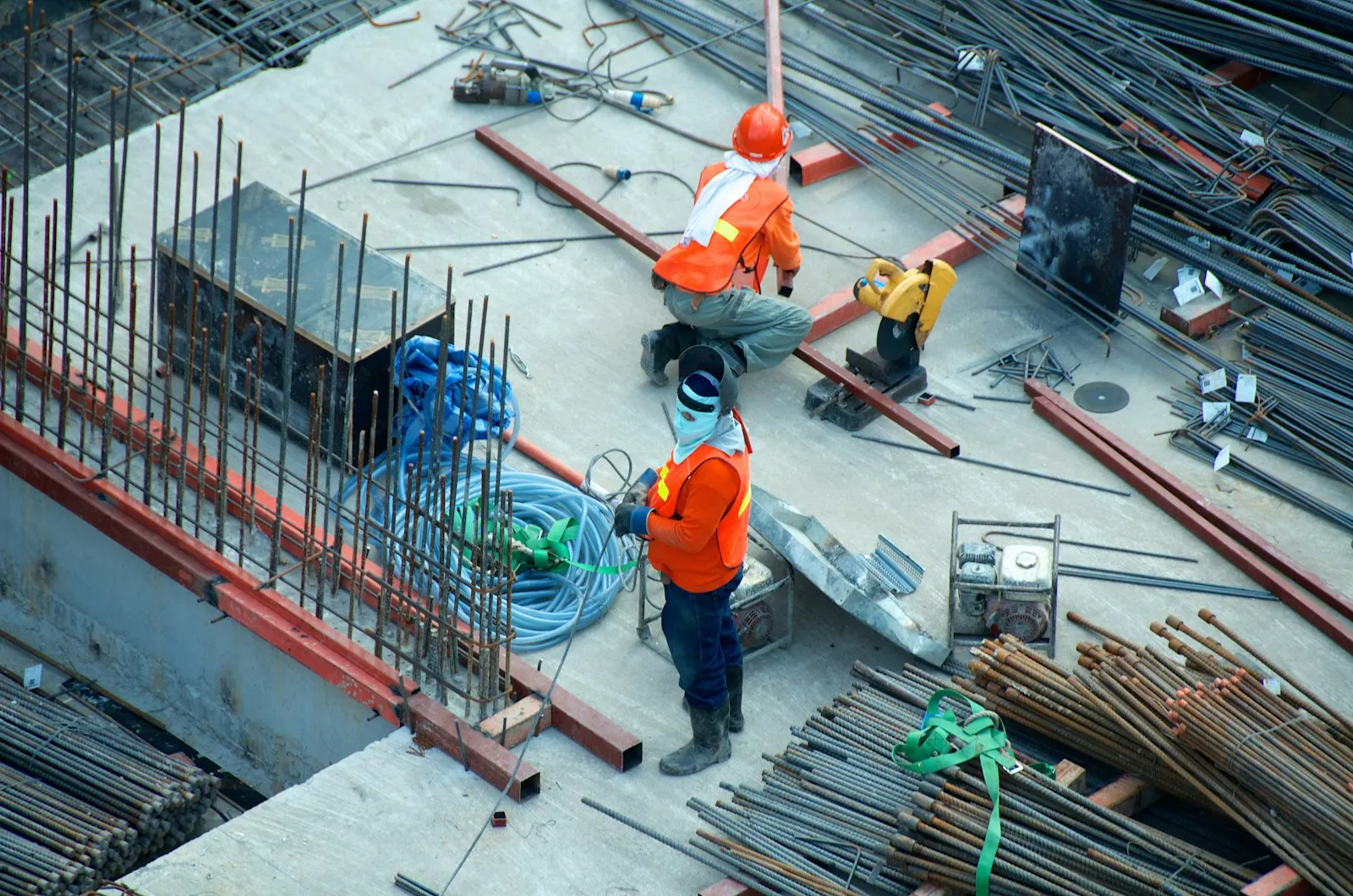

Before adding a storey, converting offices into homes or after cracks appear, one question always comes up: can the existing structure carry what we are asking of it? Answering it is the purpose of a structural assessment.
Step 1: gathering documents
Original drawings, calculation notes, soil reports, history of works: every document found reduces uncertainty, and therefore the cost of investigations. Without them, the assessment relies more on surveys and opening-up works.
Step 2: site visit and surveys
The engineer identifies the load-bearing system, locates the defects and maps them. For cracks, location, orientation, width (crack gauge) and evolution over time are recorded, the latter with tell-tales fixed across the crack.
Step 3: investigations
Depending on what is at stake, these may include:
- rebar detection and cover measurement (covermeter, radar);
- cores to measure concrete strength;
- carbonation depth and chloride content tests;
- foundation trial pits, together with a geotechnical engineer.
Reading a crack
- Fine, widespread cracks: often shrinkage, usually without structural significance.
- Stepped or diagonal cracks near corners: a possible sign of differential settlement.
- Cracks along the bars with spalling: reinforcement corrosion, to be treated quickly.
- Mid-span cracks under a beam or slab: bending, to be compared with the re-analysis.
Only a combined analysis (geometry, evolution, re-analysis) allows a conclusion.
Step 4: re-analysis and recommendations
The analysis model includes the measured properties. The report ranks defects by severity and proposes solutions: monitoring, repair, strengthening (carbon fibre, jacketing, steel sections) or, sometimes, demolition.
Two recent examples
In Saint-Cloud, COFEC was appointed after damage in the first basement car park of an 88-unit building: diagnosis, re-analysis and reports. In Saint-Maur-des-Fossés, the survey of an added storey with a pool revealed undersized beams, missing connections and inadequate foundations; the comparative study led to demolition and rebuild, safer and more cost-effective than strengthening.